Business Name: BeeHive Homes of Crownridge Assisted Living
Address: 6919 Camp Bullis Rd, San Antonio, TX 78256
Phone: (210) 874-5996
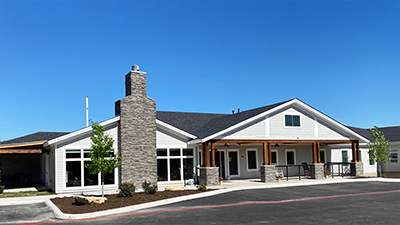
BeeHive Homes of Crownridge Assisted Living
We are a small, 16 bed, assisted living home. We are committed to helping our residents thrive in a caring, happy environment.
6919 Camp Bullis Rd, San Antonio, TX 78256
Business Hours
Monday thru Saturday: 9:00am to 5:00pm
Facebook: https://www.facebook.com/sweethoneybees
Instagram: https://www.instagram.com/sweethoneybees19/
Families often come to assisted living with relief. Meals are handled, medications are monitored, there is a call pendant for emergencies, and social activity returns. For many older grownups coping with early or moderate dementia, that structure is enough for a while. Then something shifts. A late night exit through a side door, a fall on the method to the restroom, a sudden suspicion that personnel are stealing, or a rejection to bathe. The care that as soon as felt proper begins to feel thin.
Knowing when dementia care needs more than assisted living is not about a single occurrence. It is about pattern, predictability, and the gap between what a person requires and what the setting is developed to provide. The choice seldom lands cleanly on a calendar date. It builds, one small adjustment at a time, up until the adjustments themselves become unsustainable.
What assisted living does well, and where it stops
Assisted living was developed to support older grownups who can still structure most of their day however require help with specific jobs. Staff hint residents to take tablets, escort to meals, and stand by for showers. The environment highlights autonomy. Doors are open, schedules are versatile, and locals reoccur for household outings. For someone with moderate dementia who takes advantage of regular but is not at high danger for getting lost or unsafe behavior, this works.
The limitations appear when cognitive signs move from forgetfulness to impaired judgment. A resident who forgets Tuesdays is manageable. A resident who believes the fire alarm is an individual message to evacuate the building at 2 a.m. Is harder to support without specialized staffing and environmental controls. The difference is not a moral judgment on the resident. It is a mismatch in between need and design.
Assisted living staff are usually ratioed to supply intermittent assistance, not continuous observation. A nurse may be on website for part of the day, with medication professionals and resident assistants covering most hours. That design assumes most locals can be left alone for stretches without high risk. In advanced dementia, the threats condense into the minutes when no one is watching.
Signs that needs are outgrowing assisted living
I keep a psychological stock of red flags. None of them by themselves proves a relocation is necessary, and all of them require context. But when 3 or four are present constantly, it is time to consider a memory care home or a devoted memory care area within a larger community.
- Repeated elopement or exit looking for that beats easy door alarms, visual cues, or redirection Escalating behaviors like sundown agitation, aggression throughout care, or deceptions that interrupt security for the resident or neighbors Weight loss, dehydration, or missed medications in spite of tips and provided meals Nighttime wakefulness that results in day sleeping and uncontrollable schedules, stressing both personnel and resident New incontinence combined with resistance to toileting or hygiene, causing skin breakdown or frequent infections
In practice, these appear in spirals. A resident begins to wander at dusk, misses out on meals, reduces weight, and becomes irritable. Irritability leads to refusal of showers, which leads to a urinary tract infection, which intensifies confusion and roaming. Simply adding one more check by assisted living staff can not constantly break that cycle due to the fact that the source is disease development, not a single fixable gap.
When security ends up being a shared responsibility
Wandering gets attention because it is simple to envision worst case results, but numerous households underestimate the compounding impact of smaller security issues. For instance, kitchen spaces in assisted living typically consist of a microwave. An older adult with middle stage dementia can error the microwave for a safe storage cabinet and place metal within, or reheat a sealed plastic container till it deforms and leakages. Another typical pattern is well intentioned neighbors switching medications or food. Personnel in assisted living supervise as they can, yet they are not designed to maintain line-of-sight monitoring.
Memory care moves the default. Doors are secured with postponed egress, outdoor area is enclosed but inviting, and cooking area gain access to is managed. More important than locks, the culture is developed around anticipating cognitive signs. Personnel are trained to enjoy hands and eyes, not just await call lights. Activity programs is staged across the day to capture the late afternoon uneasyness that many homeowners feel.
Behavioral symptoms that test the edges
I when worked with a retired teacher who had been the social center of her assisted living dining-room. Over twelve months, her Alzheimer's disease advanced from mild lapse of memory to consistent misconceptions. She believed her daughter had been changed by an imposter. At first, staff could redirect with humor and photographs. Later on, the misconceptions bled into mealtimes. She guarded her plate, accused tablemates of poisoning her soup, and pressed a server who attempted to clear dishes.
Assisted living can handle episodic habits. The obstacle is frequency and intensity. When a resident needs 2 individual assistance for a lot of personal care because of resistance or fear, ratios bend. When next-door neighbors end up being fearful or avoid the dining room, community life tears. A memory care home expects these behaviors. Staff plan care with strategies like stepwise cueing, hand under hand support, and back quick intros that reduce viewed danger. The physical space is quieter, with fewer triggers like overhead announcements or crowded hallways. Those little ecological modifications matter when someone's nervous system is on alert.
Clinical intricacy and comorbidities
Dementia rarely takes a trip alone. Diabetes, cardiac arrest, COPD, and persistent kidney disease frequently ride along with. Early on, these conditions can be handled with regular vitals, organized pillboxes, and timely refills. Later, the cognitive load of managing symptoms exceeds what reminders can do. A resident might consume very little because they no longer acknowledge thirst, sending out high blood pressure and kidney function into unsafe zones. Or they might cough quietly through the night since they forgot how to utilize an inhaler.
Assisted living medication services are typically built around oral medications on a schedule. Insulin titration, as required nebulizer treatments, and close observation for goal need more nursing oversight. Many assisted living communities can bring in home health or hospice to layer support, which can extend the practicality of staying. That works up until needs become continuous rather than periodic. Memory care neighborhoods within bigger communities frequently have higher nurse existence, in some cases 24 hr, and tighter coordination with checking out medical providers. It deserves asking directly about nurse protection by hour, not just by title.
What modifications when you move to memory care
A memory care home is not merely assisted living with a locked door. The very best ones look and feel different on purpose. Corridors are much shorter. Lighting is even and without glare. The kitchen smells like baking in the afternoon because the group counts on fragrance to cue hunger. Activities take place in loops instead of set blocks, so somebody who can not participate in at 10 a.m. Can sign up with at 10:20 without feeling late.
Staffing tends to be heavier, with smaller resident groups assigned to each caregiver, which permits staff to find out private routines. For one resident, brushing teeth had to follow the 2nd sip of early morning coffee. For another, a bath was only bearable after music from the 1960s filled the space. Those information are not fluff. They are medical tools in dementia care, and they are difficult to provide at scale in a traditional assisted living setting.
Medication administration shifts from reminders to observation. A resident might pocket tablets in assisted living without anyone seeing till the weekly count is off. In memory care, personnel watch to confirm swallow, offer one tablet at a time, and utilize applesauce or pudding carefully. With time, clinicians may streamline programs by deprescribing excessive medications, which minimizes risk of interactions and negative effects. This takes coordination amongst the primary care clinician, memory care nurse, and often an expert pharmacist.
How to check out the inflection points
Families often tell me they seem like they are "giving up" by relocating to memory care. In practice, the move is often an investment in what matters most. If the objective is preserving self-respect, comfort, and moments of pleasure, then an environment that minimizes triggers and makes the most of successful engagement is not a retreat. It is a strategy.
The clearest inflection points are duplicated, unresolvable risks and relentless distress. A single minor fall does not mandate a relocation. Three unwitnessed falls in a month, paired with nocturnal roaming and missed out on medications, suggest the present setting can not compensate dependably. Similarly, duplicated 911 calls or frequent transfers to the emergency situation department are an apparent signal that bandwidth is gone beyond. Each ambulance trip accelerates decrease. Memory care teams can often deal with minor infections, dehydration, and agitation in place with doctor oversight.
Money, contracts, and the great print
Care choices live in the real life of spending plans and advantages. Assisted living is often private pay, with a base lease and tiered service charge as needs increase. Memory care homes follow a comparable structure however at a greater standard due to the fact that of staffing and ecological expenses. Month-to-month expenses differ commonly by region, however the delta between assisted living and memory care can run 10 to 30 percent.
Read the service plan and the residency arrangement line by line. Search for language around "2 person help," "behavioral management," and "awake overnight staffing." Some assisted living neighborhoods schedule the right to release with 1 month notice if needs go beyond scope. Others run a continuum on the very same school and can use an internal transfer. If Veterans benefits, long term care insurance, or state Medicaid waivers are part of the strategy, ask straight how they apply to memory care. I have actually seen families amazed when a policy that covered assisted living-room and board did not cover behavioral care include ons.
Planning a shift without exploding trust
Moves are tough for individuals with dementia. Excessive change simultaneously can amplify confusion and distress. The very best transitions are staged and familiar. Bring the same quilt, lamp, and household images. Reproduce the bedside table design so the watch and glasses sit exactly where the resident expects. If a preferred caretaker from assisted living can visit throughout the very first week to reduce early morning regimens, that little continuity pays off.
Families in some cases ask whether to inform the person about the relocation in advance. There is no single right answer. For some, gradual orientation assists. For others, anticipation fuels anxiety. I favor basic reality in gentle language on the day of the relocation, anchored in security and convenience. You might say, "We are going to a brand-new place where your team can help with the nights and make certain meals feel great again." Arguing realities when someone is distressed seldom assists. Using a significant next step does. "Let's have tea in your brand-new chair, then we can see the garden."
A quick case study
Mr. L was 84, a retired engineer who prided himself on repairing things. In assisted living, he invested afternoons strolling the halls, identifying minor problems, and alerting maintenance. Over a year, his vascular dementia advanced. He began taking apart smoke detectors to "stop the beeping" even when they were quiet, and he pried open an unit door to "change the bad lock." Personnel attempted redirection and "tasks" that carried his need to memory care BeeHive Homes of Crownridge Assisted Living play, like arranging hardware into bins. It worked till it did not. He cut his hand reaching into a housekeeping cart for a screwdriver.
The family was reluctant to move him, fearing he would feel constrained. In a memory care home with a protected courtyard, personnel handed him safe jobs at a workbench developed for the purpose. He "repaired" birdhouses and sorted large plastic nuts and bolts. His outings shifted from independent laps down the public hallway to purposeful walks in the garden, with an employee signing up with for the first couple of days until the pattern stuck. Occurrences dropped. He slept more consistently due to the fact that late day agitation had an outlet. The move did not eliminate his disease, but it rebalanced threat and satisfaction.
Evaluating a memory care home like a pro
The tour is theater, but useful if you understand where to look. I prevent scripted questions and pay attention to the edges. Who is out and about at 3 p.m., a traditional sundown window. Are there meaningful activities that are not group based, because not everyone flourishes in a circle of chairs. How do staff address citizens they do not yet know by name. If a resident is calling out, does someone respond rapidly with a calm voice or does the call echo down the corridor.
Ask to examine the last state study or evaluation report. Every community has citations. The pattern matters more than the presence. Repetitive problems around staffing, medication errors, or elopements deserve additional scrutiny. Ask the director how they changed after the citation. Specifics beat platitudes. You want to hear, "We changed our 2 to 10 p.m. Staffing from three to four and re-trained on monitoring exits every 20 minutes," not "We take security very seriously."
Nonfacility choices that can bridge the gap
Not every escalation implies an immediate move. Some families can extend time in assisted living or in the house by adding targeted supports. Adult day programs with dementia care proficiency offer structured activity and lower daytime napping, which can improve nighttime sleep. Personal responsibility aides who understand how to cue and speed care can reduce bathing battles. Home health can follow for a month after hospitalization to support, though it is episodic and not a long term solution.
Hospice, typically misinterpreted, is a service layer focused on convenience and lifestyle for those likely in the last six months of life if the illness runs its usual course. In dementia, that timeline is fuzzy. What matters is whether the person is dropping weight, has had frequent infections, is mostly chair or bed bound, and needs help with the majority of personal care. Hospice can be delivered in assisted living or memory care and can decrease disruptive emergency clinic visits by managing signs in location. Importantly, hospice is not a location, it is a team that pertains to where the individual lives.
The psychological work household need to do
Care levels are not just medical decisions. They are identity choices, for both the person living with dementia and individuals who love them. Adult children sometimes bring pledges they made years earlier: "I will never move you to a facility." Those guarantees were made in love with insufficient information. If keeping that pledge now suggests long-lasting continuous fear, duplicated injuries, or lost moments of connection due to the fact that every interaction is a firefight, then it is time to renegotiate the promise. The new pledge may be, "I will make certain you are safe, highly regarded, and comforted, and I will be with you typically."
Caregivers grieve in layers. The move to memory care can seem like another layer of loss, but it can also open space to end up being family again. When you are not exhausted from being on high alert, you can sit together and listen to a song, or scan a photo album and see your loved one's face soften at the image of a long ago pet dog. Those moments look little from the outside. Inside this work, they are the anchor.
Two succinct checklists for families
The first is a reality check to decide if a relocation beyond assisted living may be needed. The second is a planning tool for a smoother transition.
- Over the past thirty days, has there been more than one elopement effort or exit looking for incident that required personnel intervention Have there been two or more falls, medication refusals that compromise safety, or new weight loss of more than 5 percent over 3 months Are habits like late day agitation, aggression throughout care, or consistent misconceptions interrupting every day life for the resident or neighbors Do care requires regularly need 2 caregivers or awake over night support that assisted living can not dependably provide Are there duplicated 911 calls, emergency clinic visits, or hospitalizations that could be prevented with closer monitoring Confirm the memory care home's staffing by shift, nurse existence, and training specific to dementia care, not just basic orientation Map a 3 day shift plan that consists of familiar objects, routines, and visits from known people at predictable times Coordinate medication evaluation with the medical care clinician and the memory care nurse to streamline regimens and guarantee continuity Align financial resources by evaluating service strategies, include on fees, and insurance or advantages protection before move in, not after Set a communication routine with the care team, for example a weekly update call, and identify one point person for decisions
Keep the lists short, truthful, and reviewed. Dementia changes month to month. What was sustainable in winter season might not be in summertime when heat, hydration, and long daytime disrupt rhythms.
Words matter, but actions matter more
In care conferences, individuals grab labels. "He's not a memory care person," somebody states, suggesting he still plays chess or jokes with staff. The truth is that memory care is not a personality type. It is a care design developed around specific threats and requirements. Many locals in memory care checked out the paper, go to music efficiencies, and greet visitors with heat. They also cope with symptoms that require an environment tuned to support them.
The objective is not to postpone memory care as long as possible at all expenses. The goal is to match setting to need so that the person dealing with dementia can have more excellent hours in the day. When a memory care home does its job, it does not feel like a step down. It feels like the ideal level of scaffolding. The structure fades into the background. What emerges are the common rituals that make a life seem like a life once again: the right seat at lunch, a hand to hold throughout an uneasy sunset, fresh sheets that smell faintly of lavender, a safe garden path for a familiar walk.
Final thoughts from practice
The hardest relocations I have actually seen were delayed by fear. The best were prepared with candor. Bring the director of your loved one's assisted living into the discussion early. Ask what supports they can add. Some can appoint a constant caretaker or engage a professional for dementia care training, which might purchase months of stability. At the very same time, tour two or 3 memory care neighborhoods, not in crisis, simply to learn the landscape. If you wind up not requiring them yet, you are still much better equipped.
Most importantly, keep in mind that levels of care are tools, not decisions. Assisted living can be the right tool for a time. A memory care home can be the ideal tool when the pattern of requirement changes. Your job is not to be ideal. Your task is to keep adjusting the plan so that safety, dignity, and connection stay within reach. When you do that, you are not giving up. You are giving care.
BeeHive Homes of Crownridge Assisted Living has license number of 307787
BeeHive Homes of Crownridge Assisted Living is located at 6919 Camp Bullis Road, San Antonio, TX 78256
BeeHive Homes of Crownridge Assisted Living has capacity of 16 residents
BeeHive Homes of Crownridge Assisted Living offers private rooms
BeeHive Homes of Crownridge Assisted Living includes private bathrooms with ADA-compliant showers
BeeHive Homes of Crownridge Assisted Living provides 24/7 caregiver support
BeeHive Homes of Crownridge Assisted Living provides medication management
BeeHive Homes of Crownridge Assisted Living serves home-cooked meals daily
BeeHive Homes of Crownridge Assisted Living offers housekeeping services
BeeHive Homes of Crownridge Assisted Living offers laundry services
BeeHive Homes of Crownridge Assisted Living provides life-enrichment activities
BeeHive Homes of Crownridge Assisted Living is described as a homelike residential environment
BeeHive Homes of Crownridge Assisted Living supports seniors seeking independence
BeeHive Homes of Crownridge Assisted Living accommodates residents with early memory-loss needs
BeeHive Homes of Crownridge Assisted Living does not use a locked-facility memory-care model
BeeHive Homes of Crownridge Assisted Living partners with Senior Care Associates for veteran benefit assistance
BeeHive Homes of Crownridge Assisted Living provides a calming and consistent environment
BeeHive Homes of Crownridge Assisted Living serves the communities of Crownridge, Leon Springs, Fair Oaks Ranch, Dominion, Boerne, Helotes, Shavano Park, and Stone Oak
BeeHive Homes of Crownridge Assisted Living is described by families as feeling like home
BeeHive Homes of Crownridge Assisted Living offers all-inclusive pricing with no hidden fees
BeeHive Homes of Crownridge Assisted Living has a phone number of (210) 874-5996
BeeHive Homes of Crownridge Assisted Living has an address of 6919 Camp Bullis Rd, San Antonio, TX 78256
BeeHive Homes of Crownridge Assisted Living has a website https://beehivehomes.com/locations/san-antonio/
BeeHive Homes of Crownridge Assisted Living has Google Maps listing https://maps.app.goo.gl/YBAZ5KBQHmGznG5E6
BeeHive Homes of Crownridge Assisted Living has Facebook page https://www.facebook.com/sweethoneybees
BeeHive Homes of Crownridge Assisted Living has Instagram https://www.instagram.com/sweethoneybees19
BeeHive Homes of Crownridge Assisted Living won Top Assisted Living Homes 2025
BeeHive Homes of Crownridge Assisted Living earned Best Customer Service Award 2024
BeeHive Homes of Crownridge Assisted Living placed 1st for Senior Living Communities 2025
People Also Ask about BeeHive Homes of Crownridge Assisted Living
What is BeeHive Homes of Crownridge Assisted Living monthly room rate?
Our monthly rate depends on the level of care your loved one needs. We begin by meeting with each prospective resident and their family to ensure we’re a good fit. If we believe we can meet their needs, our nurse completes a full head-to-toe assessment and develops a personalized care plan. The current monthly rate for room, meals, and basic care is $5,900. For those needing a higher level of care, including memory support, the monthly rate is $6,500. There are no hidden costs or surprise fees. What you see is what you pay.
Can residents stay in BeeHive Homes of Crownridge Assisted Living until the end of their life?
Usually yes. There are exceptions such as when there are safety issues with the resident or they need 24 hour skilled nursing services.
Does BeeHive Homes of Crownridge Assisted Living have a nurse on staff?
Yes. Our nurse is on-site as often as is needed and is available 24/7.
What are BeeHive Homes of Crownridge Assisted Living visiting hours?
Normal visiting hours are from 10am to 7pm. These hours can be adjusted to accommodate the needs of our residents and their immediate families.
Do we have couple’s rooms available?
At BeeHive Homes of Crownridge Assisted Living, all of our rooms are only licensed for single occupancy but we are able to offer adjacent rooms for couples when available. Please call to inquire about availability.
What is the State Long-term Care Ombudsman Program?
A long-term care ombudsman helps residents of a nursing facility and residents of an assisted living facility resolve complaints. Help provided by an ombudsman is confidential and free of charge. To speak with an ombudsman, a person may call the local Area Agency on Aging of Bexar County at 1-210-362-5236 or Statewide at the toll-free number 1-800-252-2412. You can also visit online at https://apps.hhs.texas.gov/news_info/ombudsman.
Are all residents from San Antonio?
BeeHive Homes of Crownridge Assisted Living provides options for aging seniors and peace of mind for their families in the San Antonio area and its neighboring cities and towns. Our senior care home is located in the beautiful Texas Hill Country community of Crownridge in Northwest San Antonio, offering caring, comfortable and convenient assisted living solutions for the area. Residents come from a variety of locales in and around San Antonio, including those interested in Leon Springs Assisted Living, Fair Oaks Ranch Assisted Living, Helotes Assisted Living, Shavano Park Assisted Living, The Dominion Assisted Living, Boerne Assisted Living, and Stone Oaks Assisted Living.
Where is BeeHive Homes of Crownridge Assisted Living located?
BeeHive Homes of Crownridge Assisted Living is conveniently located at 6919 Camp Bullis Rd, San Antonio, TX 78256. You can easily find directions on Google Maps or call at (210) 874-5996 Monday through Sunday 9am to 5pm.
How can I contact BeeHive Homes of Crownridge Assisted Living?
You can contact BeeHive Homes of Crownridge Assisted Living by phone at: (210) 874-5996, visit their website at https://beehivehomes.com/locations/san-antonio, or connect on social media via Facebook or Instagram
Conveniently located near Santikos Palladium a amazing upscale movie theater with full food & drink menu. Catch a movie and enjoy some great food while you wait.